Walter — What farmers buy, make & do instead
There's a plain metal building on the edge of nearly every county seat — no window display, no music, no aisle. It sells the same chemicals, soaps, oils and hardware as the bright store across town, in bigger containers with plainer labels, at a fraction of the price. This manual is the written record of what's in it, what each thing is for, and what it costs against what you're paying now.
"Walk in like you belong. They sell to anyone with money, and nobody has ever been asked how much land they farm."
— WalterThe Manual
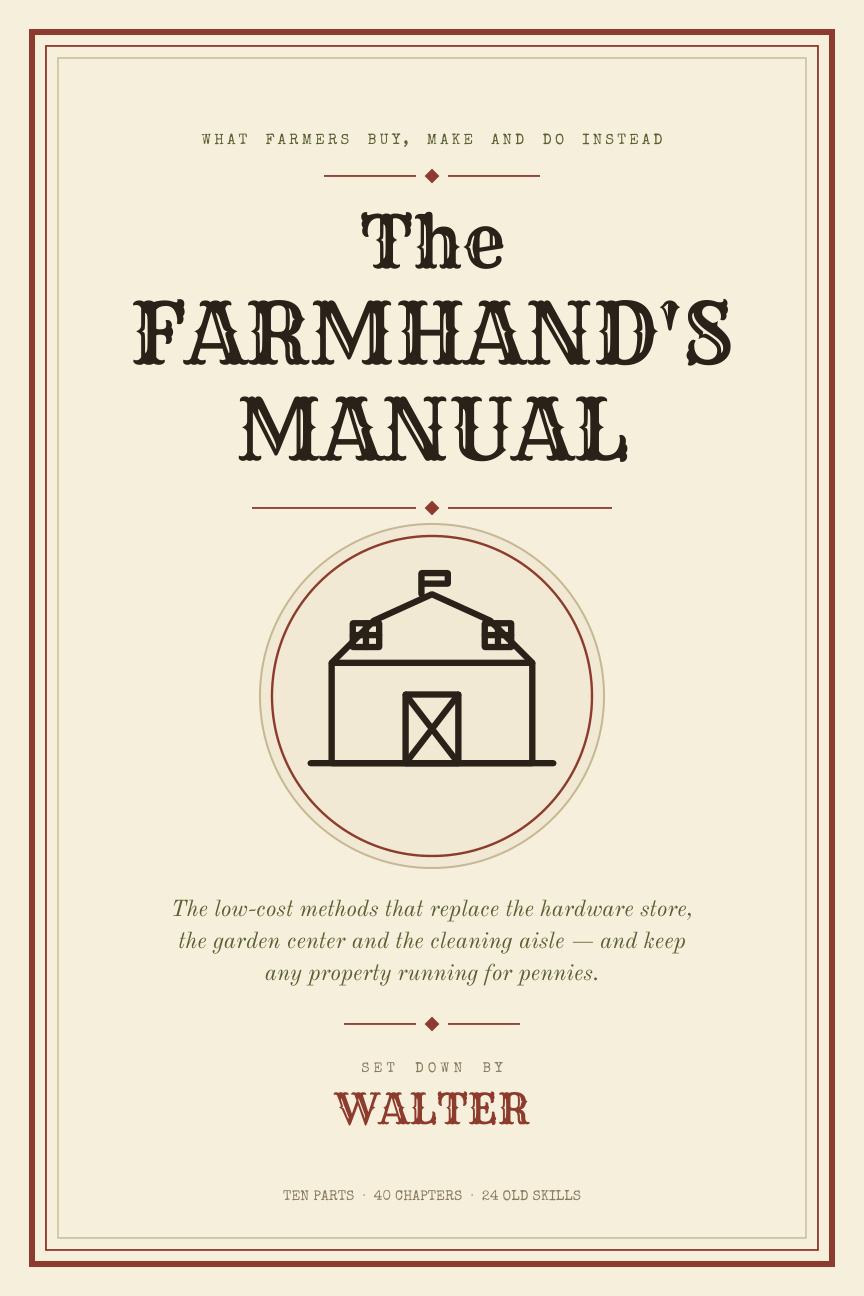
I've spent a working life buying out of that plain metal building on the edge of the county seat. This book is the record of it — plain headings, plain paragraphs, and a farm-counter price on everything.
One spring I ran an experiment I recommend to anybody who thinks I'm exaggerating. I listed eleven ordinary things a property needs in a season — weed control for the gravel drive, a general degreaser, laundry soap, a rodent program for the barn, penetrating oil, a gallon of wood preservative, and so on. I bought the consumer version of all eleven in town, keeping every receipt. Then I bought the farm-supply equivalent of the same eleven jobs.
The retail basket came to a little over three hundred dollars and covered one season. The farm basket came to a hair under ninety — and covered two to five.
The gap isn't one number. It's four, stacked: the water somebody already diluted for you, the molded container you re-buy each time, the package size kept small so the shelf price never makes you hesitate, and the aisle itself — the end-caps and the brand-building. Strip those four away and what's left is the material. That's what the farm counter sells you, and that's the whole argument of this book.
The Difference
Both are honest businesses answering the customer in front of them. Almost nobody ever told the second customer the first one exists.
What's Inside
Read Parts I and II first — they teach you to buy, and they carry the law that governs the rest. After that, open the book to whatever you're fighting this week.
The four kinds of store and which one you're standing in, opening an account, reading a bulk label, and what "commercial grade" does and doesn't mean.
Rate, volume and your sprayer. Why the same product fails on your place. Storage, shelf life, PPE, and disposal. The label is the law.
The drive, gravel and cracks. Fencelines, ditches and the edges nobody mows. Pasture and open ground. And the free half — mechanical and cultural control.
Exclusion before poison. Bait-station economics and when to trap instead. The barn, the shed and the feed room. Insects around the perimeter.
The rules before the recipes — read them first. Laundry batches that last a year, degreaser and the shop floor, glass and floors, barn cleaning and fly spray.
The ten-dollar file that doubles every tool you own. Getting rust off and keeping it off. What each lubricant is actually for. Wood, and the repair-over-replace call.
Where to save on fence and where to never. Gates that don't sag. Water lines, hydrants and freeze. Drainage — the cheapest fix on the property.
Fuel storage, stabilizing and the ethanol problem. The service schedule that doubles equipment life. Winterizing. Small-engine triage: fuel, spark, air, compression.
Twenty-four old skills, alphabetical by task — the things a farm did for itself before there was a product for it. Set down plainly so you can do them too.
Bulk math and the break-even point — and, just as important, what not to buy in bulk. Plus four appendices: dilution & mixing, conversions, where to buy, and the cost worksheet.
Reader Results
"Read Parts I and II on a Sunday, opened an account at the co-op that Monday. First jug of concentrate paid for the whole book. Wish I'd had this thirty years ago."
"The concentrate math chapter alone fixed why my sprayer never worked right. Now I mix it once and it holds. Plain talk, no filler — reads like he's standing in the shop with you."
"The 1950s list is worth the price by itself. Made the laundry batch — a year's worth for what one jug costs in town. My father did it this way and I'd forgotten."
About Walter
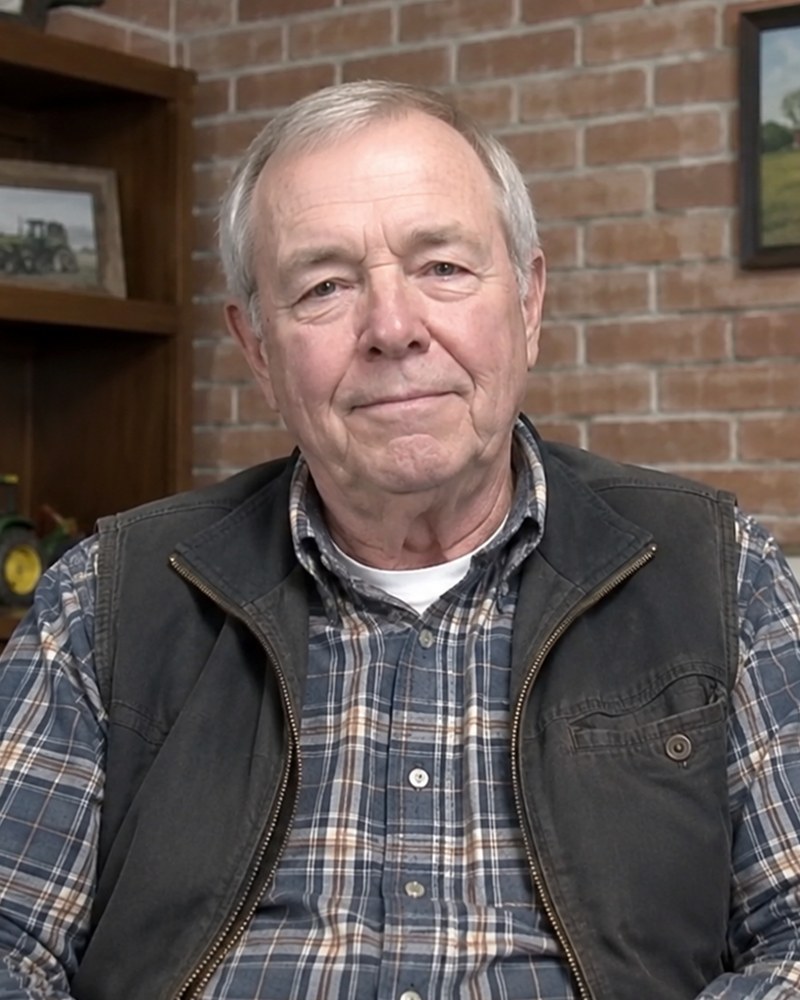
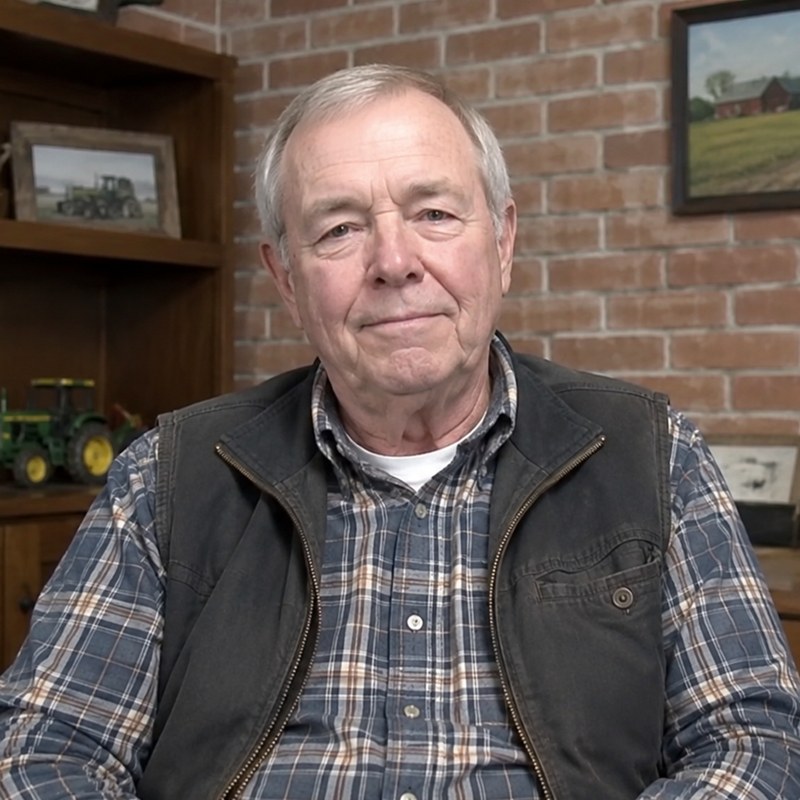
For years the channel has been me, a tailgate, and whatever needed doing that week. Folks kept asking me to write it down — what I buy, what I make instead, and what it costs against the store. So I did.
Every chapter is built the same way, on purpose: what the job is and what it costs at retail, the farm answer to it, a shopping list with real prices, a red panel for the safety and the law, and an honest word about what the method won't do and where I'd rather you spent the money. Where I couldn't verify a figure, I left it out rather than estimate it.
Get the Manual
Questions
It's the plain record of a working life buying out of the farm-supply counter — the stores, the concentrate math, the methods, and a price on everything. Some of it you may know. Most people don't know the building exists, or that a ready-to-use bottle is mostly water someone already charged you freight on. Every dollar figure is a 2026 farm-counter price from my own region, rounded, with the arithmetic shown so you can redo it with your own prices.
The videos are a job here and a story there. The manual is the whole thing in order, in one place you can hold: ten parts, forty chapters, the shopping lists, the red panels for the law, and the 1950s list — organized so you can open it to whatever you're fighting this week instead of scrubbing back through videos to find the one where I said it.
Because the whole point of the book is that you shouldn't pay for packaging you don't need — and it would be a poor joke to price the book against that. Twenty-seven dollars is less than a single jug of brand-name concentrate in town, and the first thing you buy the farm way tends to pay it back.
A 150-page PDF, delivered the moment you order. Read it on your phone or tablet, or print it for the shop bench. It's yours to keep — no subscription, nothing to renew.
The shape holds; the exact numbers won't. Prices move, regions differ, and your property isn't mine — that's why the cost worksheet is in the back. And read the red panels: this manual is informational, not professional advice. Follow every product label and manufacturer instruction — where the book and a label disagree, the label governs. Pesticide and applicator laws vary by state; check with your state department of agriculture and county extension before you buy or apply anything.